美
Japanese Art & Aesthetics
Wabi-sabi, mono no aware, ma and the other ideas behind Japanese beauty, from tea bowls to manga
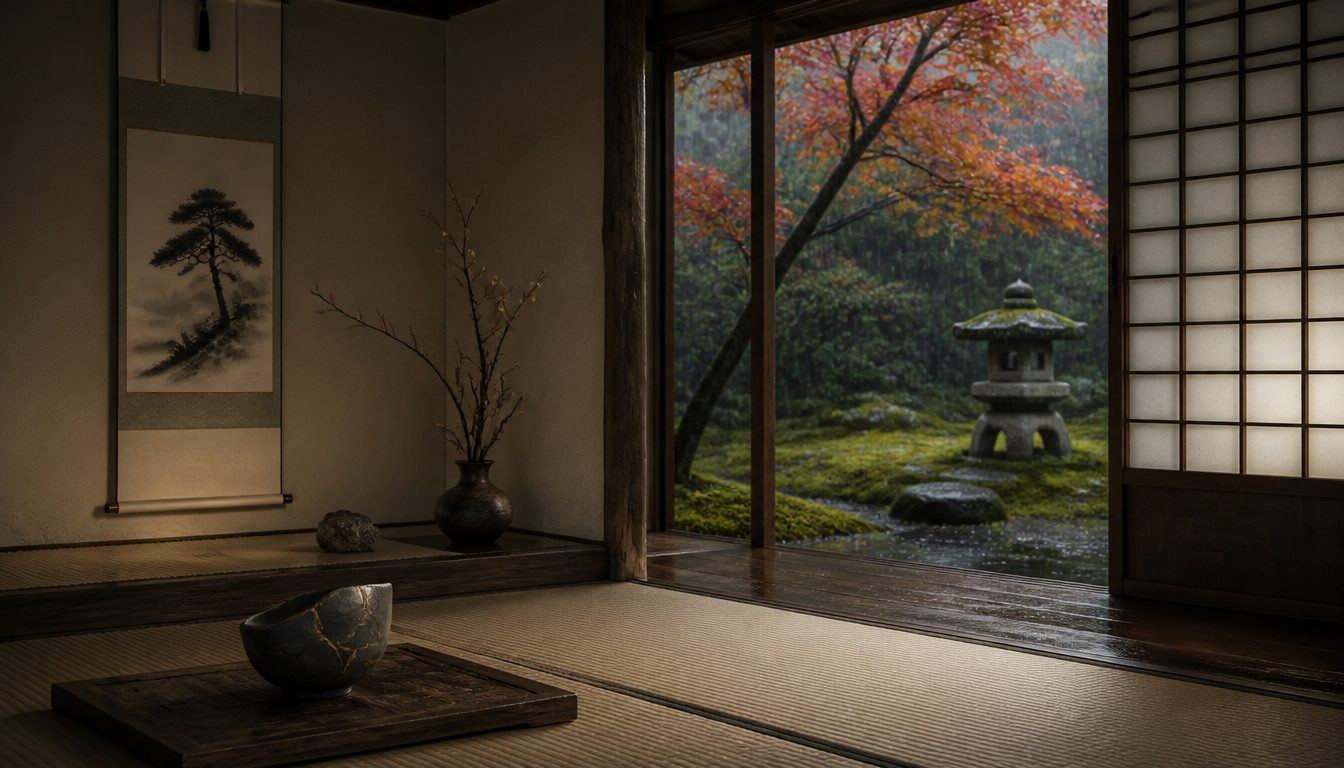
Japanese art has a few ideas of beauty that keep coming back. A cracked tea jar can be worth more than a flawless one. A garden can be made of nothing but gravel and fifteen stones. A poem can move you most through what it leaves unsaid. This exhibit explains the best-known of these ideas, where each one came from and who first wrote about it, and then follows them through tea, gardens, ink, prints, flowers and comics.
The ideas of Japanese beauty
Most of the words in this exhibit are old. Aware appears in the eighth-century poetry anthology Man'yōshū. Sabi and yūgen were working terms of court poetry criticism by the twelfth century, and wabi shaped the tea gatherings of the fifteenth and sixteenth centuries. Nobody in those centuries treated them as a set, though. Each belonged to a particular art (a kind of poetry, a style of tea, a school of theatre) and meant something specific to the people who practised it.
The idea of a single "Japanese aesthetics" is much more recent. The Stanford Encyclopedia of Philosophy notes that Japan had no philosophical discipline matching Western "aesthetics" until the nineteenth century. Much of what readers now meet as Japanese aesthetics comes from a handful of twentieth-century books that gathered older terms and explained them to a modern audience, often a foreign one.
- Okakura Kakuzō, The Book of Tea (1906). Written in English for Western readers, it presents tea as a philosophy of life. Okakura called it "essentially a worship of the Imperfect", and the phrase has followed the tea ceremony ever since.
- Kuki Shūzō, The Structure of "Iki". Kuki drafted it in Paris in 1926 and published it soon after returning to Japan in 1929. It is a philosophical study of an Edo-period ideal of style.
- Tanizaki Jun'ichirō, In Praise of Shadows (1933). A novelist's essay defending dim rooms, lacquer, patina and shadow against electric light and glossy modern surfaces.
- Leonard Koren, Wabi-Sabi for Artists, Designers, Poets and Philosophers (1994). The book helped make "wabi-sabi" a familiar phrase in English, especially among designers.
None of this makes the ideas inauthentic. It does mean that a tidy definition of "wabi-sabi" in a design magazine is a modern summary of something older, looser and more varied, and the sections below try to keep the two apart.
Wabi-sabi
Wabi-sabi joins two words that had separate histories for centuries.
Wabi: the beauty of the humble
Wabi comes from a verb meaning to languish or to be forlorn. The JAANUS dictionary of Japanese art notes that in early poetry it described the misery of an abandoned lover, and later the bare life of the poet-hermit. Its meaning turned positive as Zen-influenced writers came to value a life withdrawn from the world, lived in a hermit's grass hut. By the fifteenth century tea masters had made wabi their central ideal: a beauty found in what is plain, rustic and unpretentious, which seems natural and unforced.
Sabi: the beauty of age
Sabi is linked to sabishii, "lonely", and sounds the same as the word for rust. In the Man'yōshū it carried a sense of desolation. The poet Fujiwara no Shunzei (1114–1204) used it as a critical quality in judging poems. Over time it came to mean the beauty of things that have weathered and aged: worn wood, lichen on stone, the dull sheen of old metal. In the late seventeenth century the haiku poet Matsuo Bashō and his followers made it a guiding mood of their verse. Tanizaki's essay is full of sabi. He writes of preferring a "pensive lustre" to a shallow brilliance, and of loving things that bear the marks of grime, soot and weather.
Together
In practice the two words blur. The Metropolitan Museum of Art describes them together as expressing "rusticity, melancholy, loneliness, naturalness, and age", the sensibility in which a misshapen, worn peasant's jar can seem more beautiful than a perfectly made dish. The habit of treating them as one fixed phrase, and as Japan's master aesthetic, owes much to modern writing, especially in the West since Koren's book.
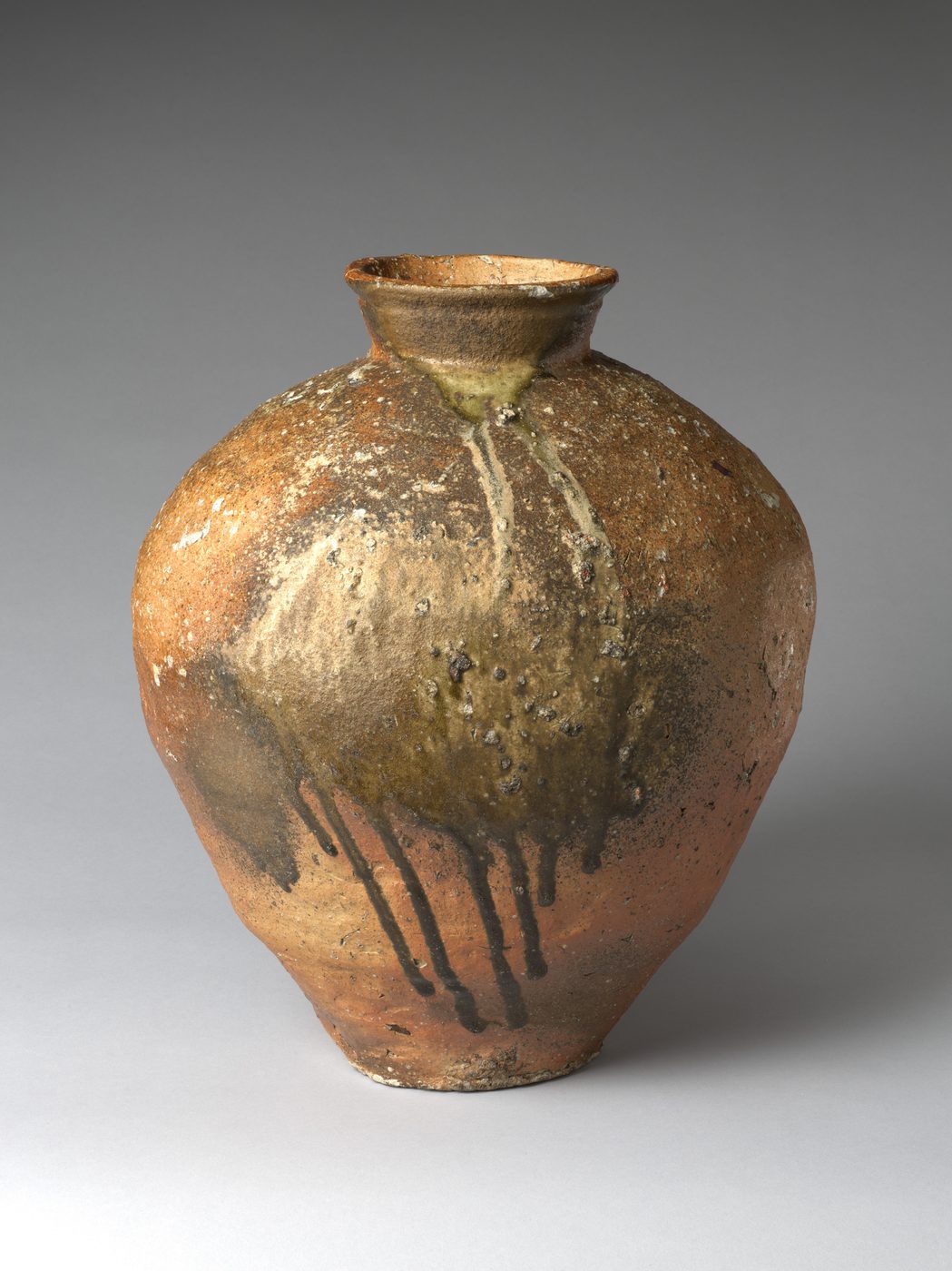
A useful test is an unglazed storage jar from the Shigaraki kilns. Potters made jars like this as everyday vessels for farmers, built them up in coils and left the fire to decide its surface. Wood ash melted on the shoulders and ran down the sides in streaks. Nobody designed it to be beautiful. Tea men of the sixteenth century looked at jars like this and found in them exactly what they meant by wabi.
Mono no aware
Aware began as an exclamation, "ah!", the sound you make when something touches you. In Heian-period literature it grew into an aesthetic ideal: a capacity to be moved, usually to a gentle sadness, by the passing of things. Its great showcase is The Tale of Genji, written by Murasaki Shikibu in the early eleventh century. JAANUS counts 1,044 uses of the word in the novel, as noun, verb and adjective.
The fuller phrase mono no aware, often translated "the pathos of things", belongs to a later scholar. In a study of Genji, the scholar Motoori Norinaga (1730–1801) argued that mono no aware was the novel's central theme, and that it meant a deep sensitivity to the emotional side of life in general, not only sadness. He did not invent the feeling. He named it, and turned it into a theory of what Japanese literature is for.
The feeling itself is easier to show than to define. Cherry blossoms are the classic example: they are loved because they fall within days, and the falling is part of their beauty. The fourteenth-century monk Yoshida Kenkō made a related point in his Essays in Idleness (Tsurezuregusa). In Donald Keene's translation, he asks: "Are we to look at cherry blossoms only in full bloom, at the moon only when it is cloudless?" For Kenkō, the blossom about to open and the garden strewn with fallen petals deserve as much attention as the moment of perfection. That habit of finding beauty in the edges of things, before and after the peak, connects mono no aware to wabi and sabi.
Ma
Ma (間) is the hardest of these words to pin down, because in ordinary Japanese it is not a special term at all. It means a gap, an interval, a pause, the space between things. The same character appears in jikan, the everyday word for "time". What has made it famous is the idea that this gap is not empty. It is a measured, meaningful interval with a part to play in the whole.
In architecture and the garden
A traditional Japanese room is often valued for what is not in it: open floor, a single scroll in the alcove, sliding panels that can merge or divide spaces. Okakura described the tea room as an "abode of vacancy", empty except for what is brought in for a single occasion. The dry garden works the same way. The stones matter, but so does the raked gravel around them, which gives each stone room to be seen.
In music and theatre
In music and theatre, ma is used for timing: the pause between sounds, the stillness between movements. The idea is that a silence has a length and a weight of its own, and is part of the performance rather than a gap in it.
How the word travelled
Ma became an international design word through an exhibition. In 1978 the architect Isozaki Arata curated MA: Space-Time in Japan at the Musée des Arts Décoratifs in Paris. According to Japan House Los Angeles, it then travelled to New York, Houston, Chicago, Stockholm and Helsinki. The exhibition presented ma as a uniquely Japanese sense of time and space as one thing. Like many of the terms in this exhibit, the word is old but the idea of it as a defining "Japanese concept" took shape in the modern era.
Yūgen
Yūgen is usually translated "mysterious grace" or "profound mystery", and it may be the most elusive idea on this page. The word came from Chinese, where it described truths too deep for words. In Japanese poetry criticism of the twelfth century it named a depth of meaning beyond the literal words of a poem. Fujiwara no Shunzei broadened it to the overall effect of a poem: its overtones, the things it suggests without stating. The writer Kamo no Chōmei, author of the Hōjōki (1212), compared yūgen to an autumn evening under a colourless, silent sky, when for no reason you can name, tears begin to fall.
The art most closely tied to yūgen is Noh theatre. The actor and playwright Zeami Motokiyo (1363–1443) treated it as the highest quality an actor could reach: a beauty at once vivid and calm. His treatises try to describe it through images rather than definitions, once comparing it to a white bird with a flower in its beak. Later Noh writers such as Konparu Zenchiku pushed the idea toward a colder, more withered beauty, and through the linked-verse poets of the fifteenth century it fed directly into the wabi of the tea room. For one of Noh's most striking masks and the plays it belongs to, see our article on the Hannya.
Iki and shibui
Two later ideas show that Japanese taste was never only about rustic simplicity.
Iki was the ideal of the townspeople of Edo (Tokyo) in the late eighteenth and nineteenth centuries. It meant chic, a stylish and knowing ease. Someone with iki was rich but not attached to wealth, worldly but not ruled by pleasure, and aware of fashion without being its slave. Its home was the pleasure quarters, and its look was subdued colour with a hint of allure. Kuki Shūzō's study analysed iki as a combination of allure, a proud composure and a Buddhist resignation, and argued that no European word could translate it.
Shibui began as a word for a taste: the astringent, mouth-puckering bite of an unripe persimmon. Over time it came to describe a quiet, understated beauty that rewards a second look, in colours, voices and objects as well as flavours. Unlike wabi-sabi, it does not require roughness or imperfection. The writer Yusuke Shibata credits the folk-craft leaders Yanagi Sōetsu and Bernard Leach with spreading this sense of the word in the twentieth century, in Japan and abroad.
Kintsugi
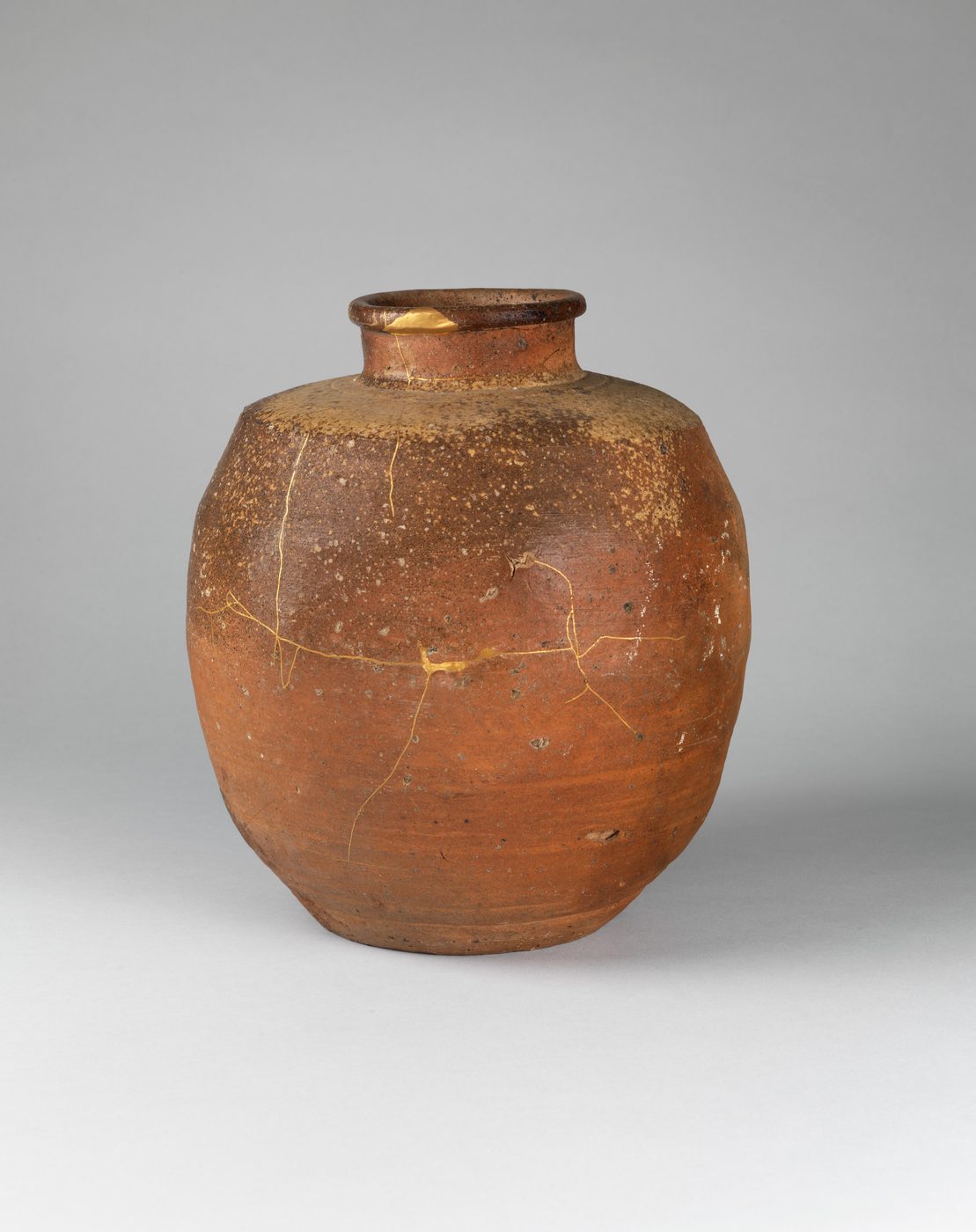
Kintsugi, "golden joinery", is a way of mending broken ceramics. The pieces are glued with lacquer made from the sap of the lacquer tree, and the seams are finished with powdered gold, so that the repair becomes visible and decorative. Silver is sometimes used in the same way. The Smithsonian's Freer Gallery of Art, in an exhibition on the subject that ran until November 2009, explained that Japanese craftsmen built on an old practice of using lacquer as an adhesive, and that gold-lacquer repairs became especially associated with ceramics used for tea.
The legend and the record
The story told almost everywhere is that kintsugi began with the shogun Ashikaga Yoshimasa. He is said to have sent a broken Chinese bowl back to China for repair, received it clumsily fastened with metal staples, and pushed Japanese craftsmen to find something better. Treat this as a legend. The real object behind it is a Chinese celadon bowl now in the Tokyo National Museum, named Bakōhan. Its story was written down by the Confucian scholar Itō Tōgai in 1727. In his account, the bowl cracked while Yoshimasa (who ruled 1449–73) was using it. He sent it to China asking for a replacement of the same quality. None could be found, so the bowl came back with its crack held by a metal clamp, which reminded people of a locust. The museum considers the Yoshimasa episode reasonably credible. But the document is about a staple repair, not a gold one. Turning this story into the origin of kintsugi is a modern step, and no surviving source records who first finished a lacquer repair in gold, or when.
Why repair became beautiful
What the record does show is that tea culture valued mended things. The Nampōroku, a 1690 record of teachings attributed to Sen no Rikyū, warns against disliking a utensil for being slightly damaged. A visible golden seam fits that attitude: the break becomes part of the object's history rather than something to hide. The modern habit of treating kintsugi as a metaphor for personal healing builds on this, but it is a modern reading.
Tea and wabi-cha
The tea ceremony, chanoyu, is where many of these ideas were put into practice. Its rituals and its four principles of harmony, respect, purity and tranquillity are described in our Sacred Traditions & Ceremonies exhibit. Here the focus is on what tea did to Japanese taste.
According to the Met, tea as it is known today emerged in the sixteenth century as a pursuit of rulers, warriors and wealthy merchants. At first the most prized utensils were old Chinese ceramics. A change came through a line of tea masters from Murata Shukō (1423–1502) to Takeno Jōō (1502–1555) and then Sen no Rikyū (1522–1591). They began to use rough Korean bowls and humble Japanese farm wares, and to find beauty in the unrefined and the irregular. This "wabi tea" (wabi-cha) moved gatherings into tiny thatched rooms modelled on a hermit's hut. JAANUS notes that Jōō pointed to a poem by Fujiwara no Teika, a view of a bare hut by the bay on an autumn evening with no blossoms or bright leaves in sight, as the essence of wabi. Rikyū took the idea furthest, favouring the smallest rooms and the plainest utensils.
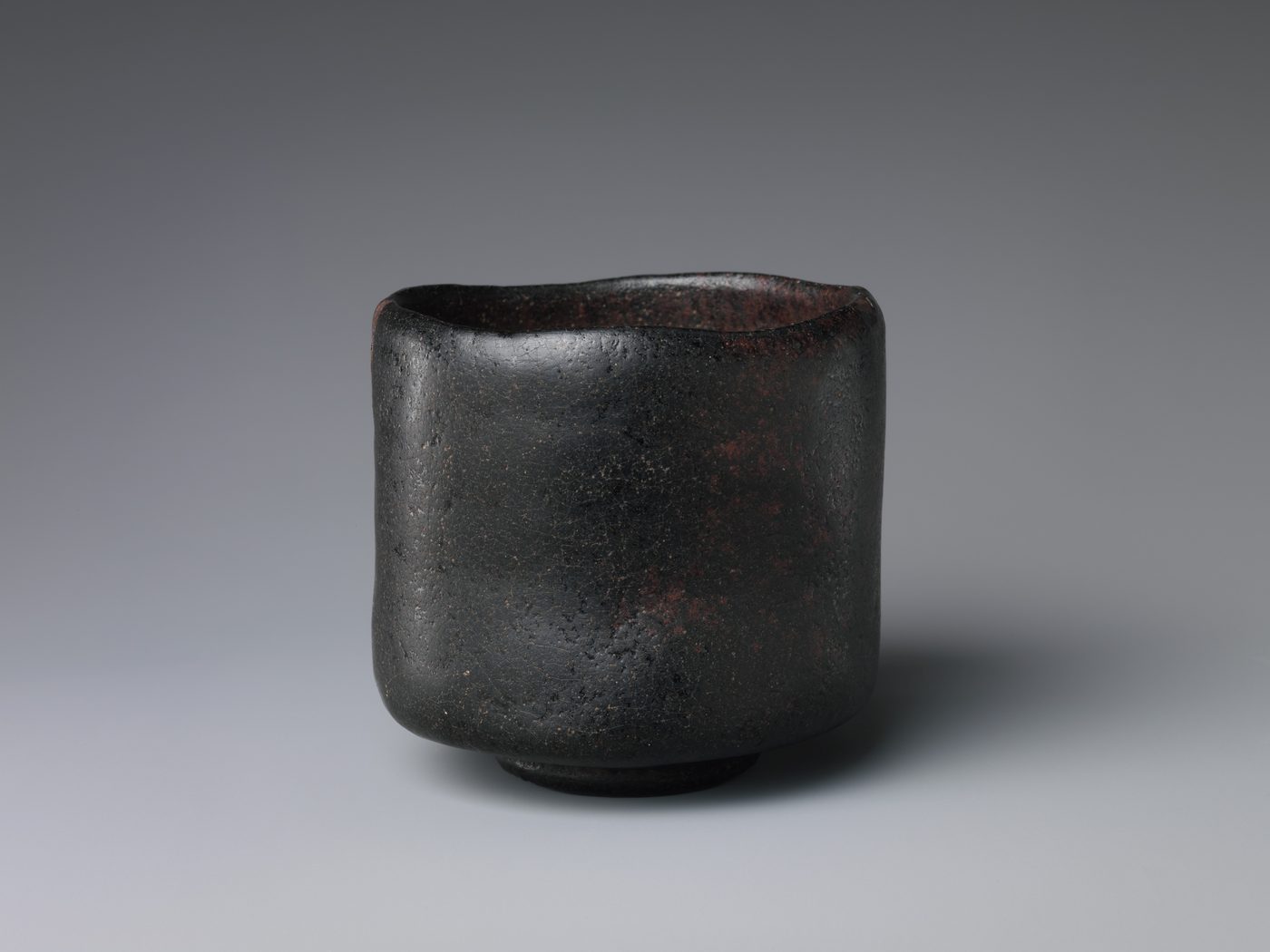
The tea masters' taste also changed how pottery was made. Kilns such as Shigaraki and Bizen began making shapes for tea on purpose. New wares appeared, above all raku: lightweight, hand-moulded bowls, often black or red. The Met notes that the Raku family of potters traces its line to Rikyū's time and still makes tea bowls today. Rikyū's pupil Furuta Oribe (1543/44–1615) became known for a taste for warped and seemingly flawed pieces, and the boldly coloured Oribe ware is named after him.
Gardens of stone and sand
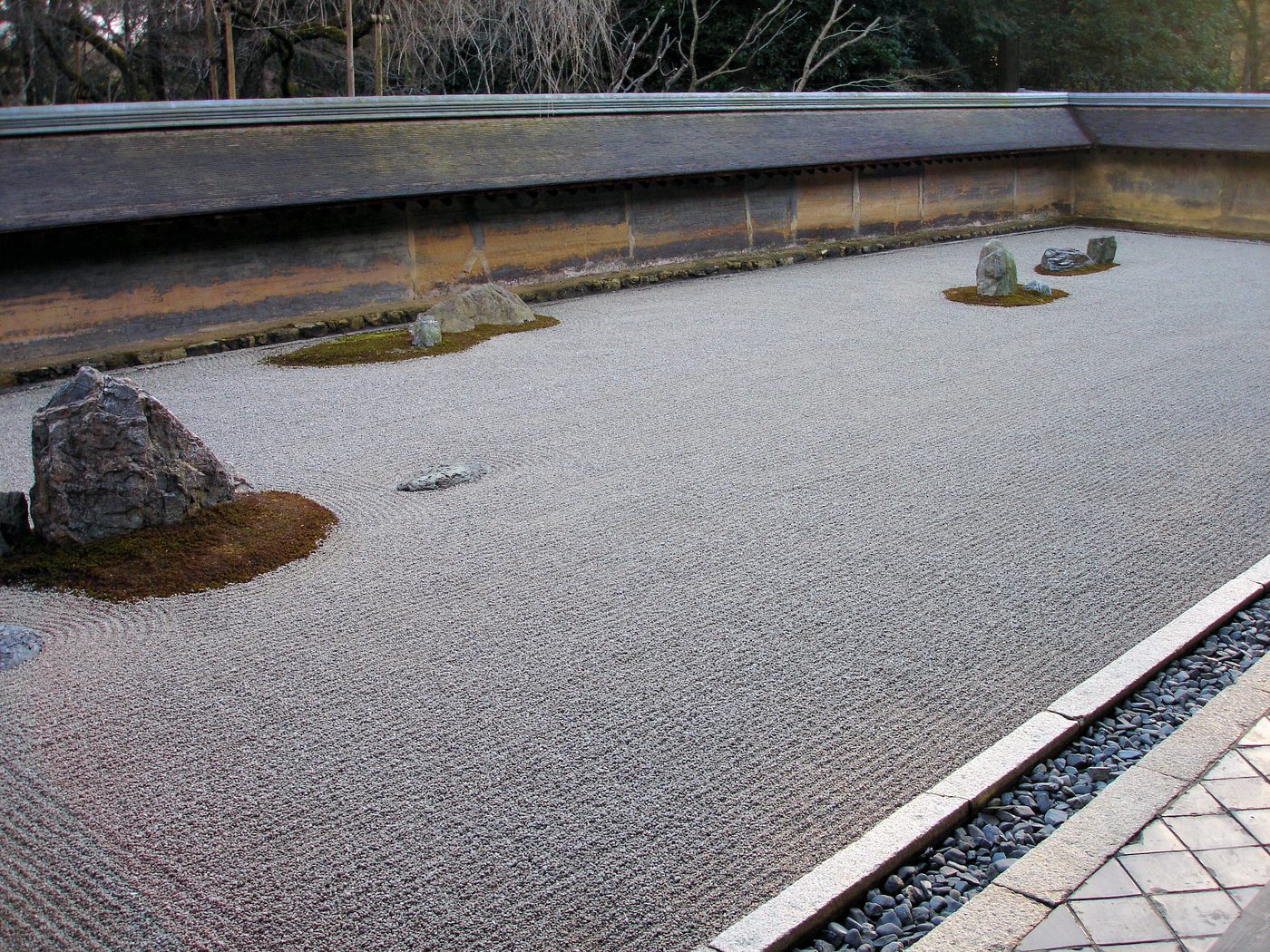
Japanese gardens come in many kinds, including pond gardens for strolling and moss gardens. The one that has come to stand for Japanese aesthetics is the karesansui, the "dry landscape". It suggests mountains and water using only stones, sand or gravel, and sometimes moss or a few plants. Raked patterns stand for flowing water. A group of upright stones can be a waterfall with no water in it. The word karesansui already appears in an eleventh-century garden manual, the Sakuteiki. The famous walled gravel gardens, though, belong to the Zen temples of the Muromachi period and after, usually beside an abbot's residence. JAANUS points out that they were designed like paintings, to be viewed from one seated position, and that they owe much to Chinese ink landscapes.
The best-known example is the garden at Ryōan-ji in Kyoto. Fifteen rocks sit in an expanse of white gravel inside an earthen wall, and from wherever you stand on the viewing platform you cannot see all fifteen at once. The temple was founded in 1450 by the warlord Hosokawa Katsumoto. As Kyoto's official tourism guide admits, no one knows for certain when the rock garden was made, who designed it, or what it was meant to mean. Popular accounts often state its date and designer, or a single correct interpretation, with confidence. Treat them with caution. Part of the garden's power is that its meaning stays open.
The form is not frozen in the past. The twentieth-century garden designer Shigemori Mirei (1896–1975) made new dry gardens, such as the east garden of the abbot's quarters at Tōfuku-ji in Kyoto, and JAANUS links the modern revival of karesansui, in Japan and abroad, to its kinship with abstract art.
Ink painting and calligraphy
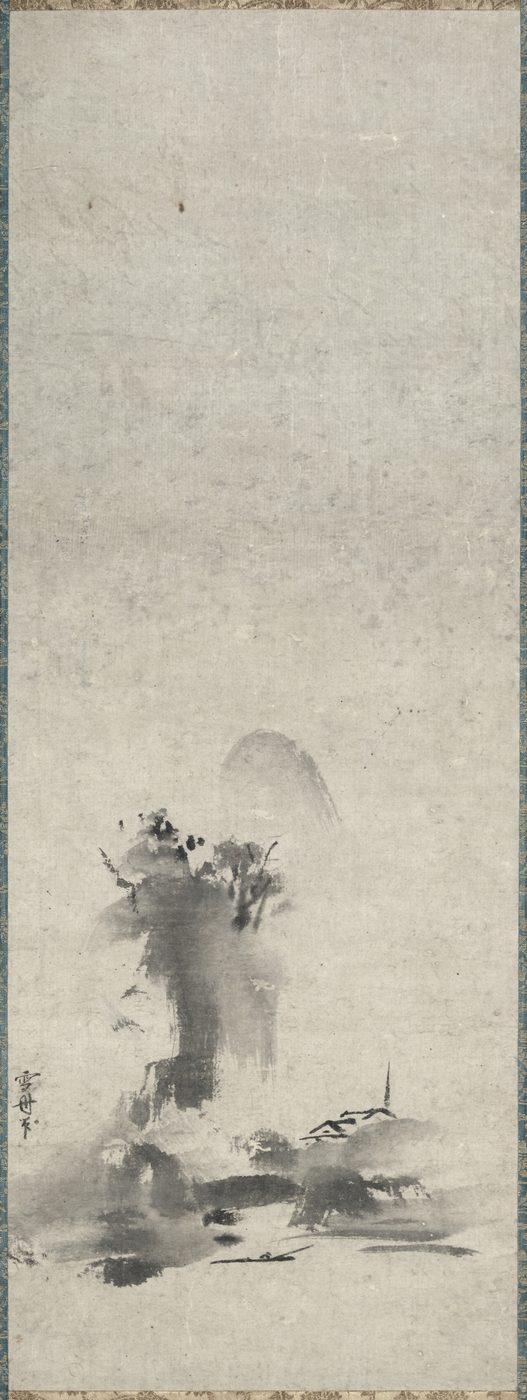
Monochrome ink painting reached Japan with Zen Buddhism, which took root in the thirteenth century. The Met explains that the first Japanese artists to work in the medium were mostly Zen monks, who painted quickly to express religious ideas. Over time the subjects widened to bamboo, plum blossom, birds and, above all, landscape. Ink painting depends on restraint. The artist works in shades of a single black and leaves much of the paper bare, so mist, water and distance are made from blank space. In that sense ink painting is ma on paper.
The great name of this tradition is the painter Sesshū Tōyō (1420–1506). Among his works, the Tokyo National Museum's Autumn and Winter Landscapes is a National Treasure. Sesshū is also known for the "splashed ink" (haboku) style, in which washes of ink are laid down quickly and loosely, so that mountains and huts seem to emerge from the wet. The Cleveland Museum of Art holds a haboku landscape catalogued under his name.
Calligraphy shares the brush, the ink and the rule that every stroke is final. It is introduced, with its tools and scripts, in our Sacred Traditions & Ceremonies exhibit. The Met notes that tea, at its highest level, drew together garden design, architecture, calligraphy, painting and flower arranging.
Ikebana
Ikebana, "living flowers", grew from Buddhist flower offerings, which JAANUS traces to the sixth century. At first these were simple, symmetrical arrangements placed on an altar beside an incense burner and a candle. By the fifteenth century flower arranging had become an art of its own. JAANUS names the priest Ikenobō Senkei, who is recorded making an arrangement in a golden vase in 1462, as the probable originator of rikka, a large, formal style. Rikka builds an asymmetrical landscape from branches and flowers, standing for the mountain at the centre of the Buddhist cosmos. The Ikenobō school he belonged to is still active.
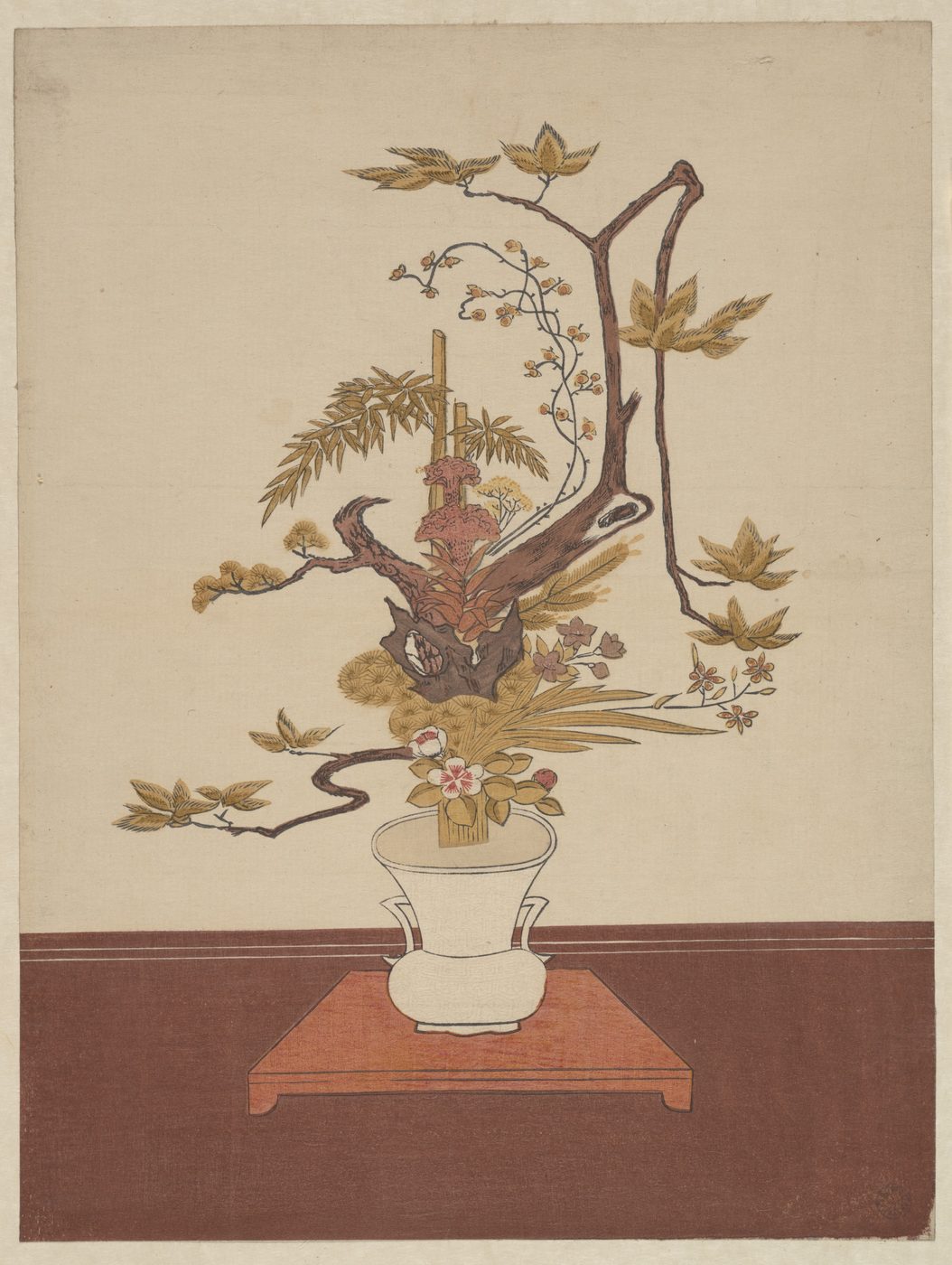
Tea brought a simpler form. Chabana, "tea flowers", is traditionally credited to Sen no Rikyū. It may use only a single bloom, placed freely in a plain vase to suggest the flower as it grows. Okakura, writing in 1906, sided firmly with the tea masters, who in his account chose the flowers and then left them "to tell their own story". The later shōka style, which arose at the end of the seventeenth century, balances three main branches in an asymmetrical triangle. It is close to the three-part structure described in our festivals exhibit.
What all these styles share with the rest of this exhibit is attention to asymmetry, to the season and to empty space. A good arrangement leaves room around the stems, and it is meant to last only as long as the flowers do.
Ukiyo-e: pictures of the floating world
Ukiyo-e, "pictures of the floating world", were the popular art of Edo-period cities. The "floating world" was the transient, and therefore enjoyable, world of city pleasures: the theatre, the pleasure quarters, fashion, sightseeing. JAANUS notes that the term ukiyo-e first appears in literature in the early 1680s, and that the painter-illustrator Hishikawa Moronobu (d. 1694) is generally regarded as the genre's founder.
Most ukiyo-e were woodblock prints, and each was a team effort. The Met's account lists four people: the artist who drew the design, the carver who cut it into cherry-wood blocks, the printer who inked and rubbed each sheet, and the publisher who chose the subject and paid for it all. Early prints were black and white with colour added by hand. In 1765 full-colour printing arrived, using a separate block for each colour. These "brocade pictures" (nishiki-e) first appeared as luxury calendars for wealthy Edo patrons, and Suzuki Harunobu was their leading designer.
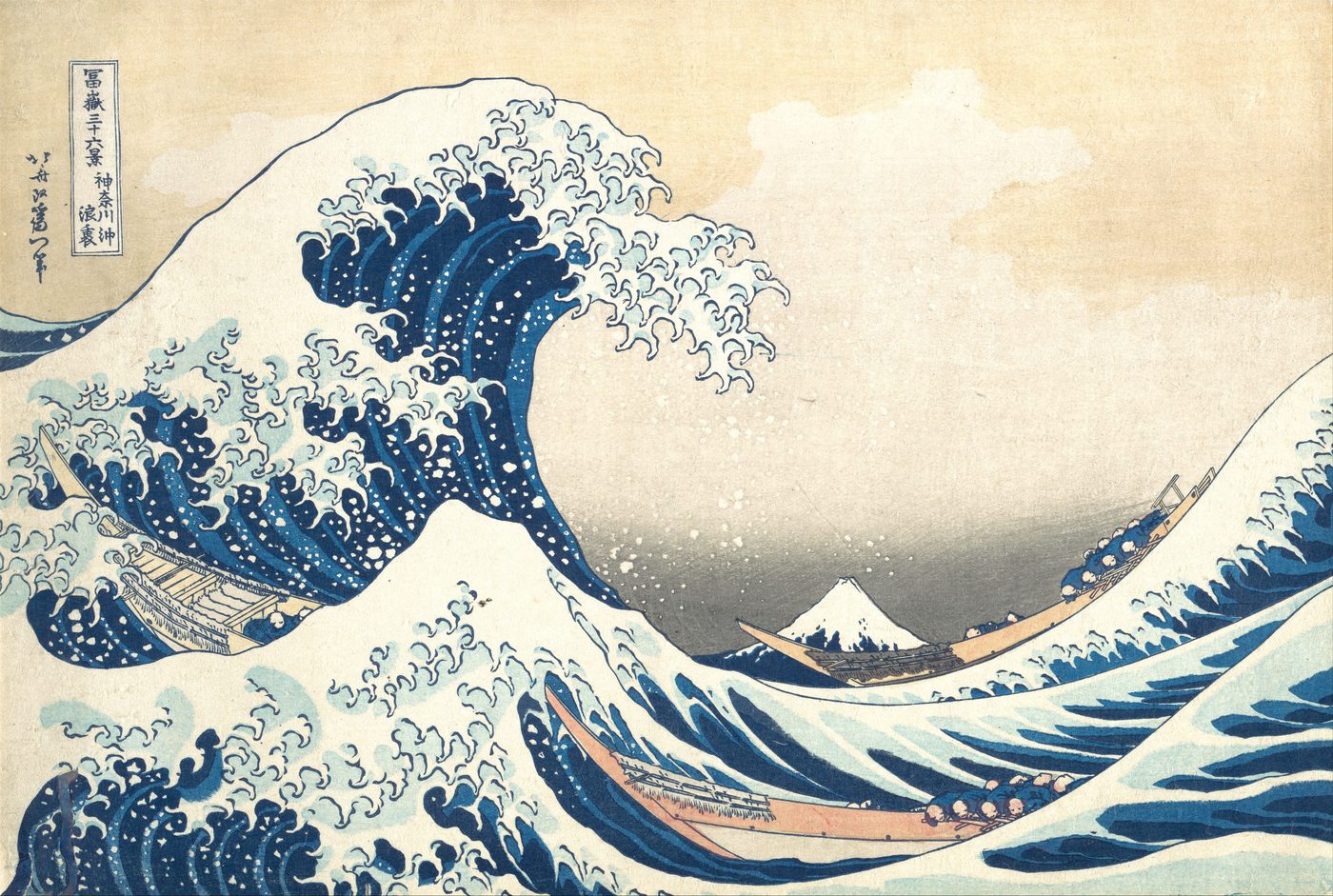
Beautiful women and kabuki actors were the main subjects for a long time. After 1800 the range widened, and landscape became a major genre, above all through two artists. Katsushika Hokusai (1760–1849) published Thirty-six Views of Mount Fuji (1831–33), which includes Under the Wave off Kanagawa, known worldwide as The Great Wave. Utagawa Hiroshige (1797–1858) published Fifty-three Stations of the Tōkaidō (1833). JAANUS contrasts Hokusai's tightly structured compositions with Hiroshige's more intimate views of weather, travellers and the seasons.
Japonisme
After Japan reopened to Western trade in the 1850s, prints, fans, lacquer and textiles poured into Europe. Paris saw its first formal display of Japanese arts when Japan took a pavilion at the World's Fair of 1867. The Met traces the effect on Western painting, a fashion called japonisme. Degas took up asymmetrical compositions, unusual viewpoints and areas of flat, empty space. After a large ukiyo-e exhibition in Paris in 1890, Mary Cassatt made a set of ten colour prints in open admiration of the Japanese ones. Toulouse-Lautrec borrowed the bold outlines and colours of kabuki prints for his posters. The prints were cheap, popular images in their own country, and they helped change modern art in another.
From scroll to manga
Manga and anime are now among Japan's best-known art forms. Their history is often told as an unbroken line from medieval scrolls to modern comics. The real story runs through several separate traditions, and it changed sharply in the twentieth century.
Scrolls of frolicking animals
The usual starting point is the Chōjū jinbutsu giga, the "Scrolls of Frolicking Animals and Humans", owned by Kōzan-ji temple in Kyoto and designated a National Treasure. The four ink scrolls date from the twelfth and thirteenth centuries. They show rabbits, frogs and monkeys bathing, wrestling and holding a Buddhist service, and in later scrolls people at games and contests. They have no text, and their artist is unknown. They are traditionally attributed to the priest Toba Sōjō (1053–1140), but there is no proof. The Kyoto National Museum notes that the scrolls are "frequently referenced as being the first example of manga". That is a popular claim, not a scholarly finding. The scrolls show lively, humorous line drawing and a sense of movement across a scroll, but they were private hand-painted works seen by very few people, and no direct line connects them to modern comics.
Edo-period picture books
Comic pictures for a wide public arrived with woodblock printing. According to the Nihon Daihyakka Zensho encyclopedia, humorous picture books called Toba-e, named after that same priest, were published in Osaka from 1720 and sold well in Kyoto and Edo too. From the 1770s kibyōshi, "yellow covers", combined text and pictures on every page to tell witty, often satirical stories of city life. Ukiyo-e artists illustrated many of them.
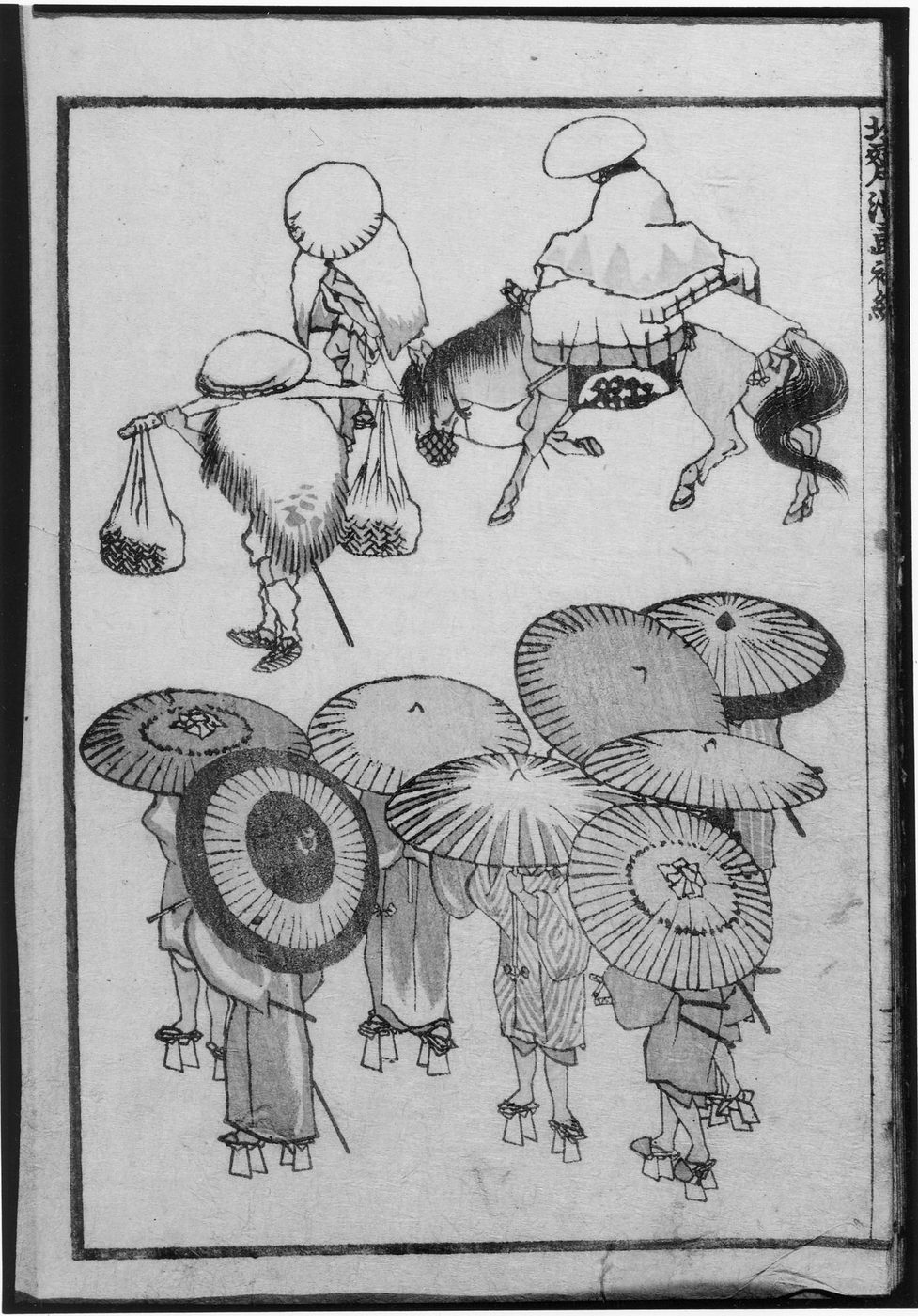
The word manga itself is often credited to Hokusai, whose sketchbooks Hokusai Manga began appearing in 1814. They are pages of figures, animals, gestures and everyday scenes, published as models for artists. The same encyclopedia points out that another book of 1814 also used the word in its title. At the time manga meant something like "random sketches", not comics. Hokusai made the word famous, but he did not invent it, and it had not yet taken on its modern meaning.
Modern cartooning
Modern manga took shape under Western influence. In 1862 the British artist Charles Wirgman started The Japan Punch in Yokohama, and Japanese newspapers soon began carrying cartoons. The cartoonist Kitazawa Rakuten launched the full-colour magazine Tokyo Puck in 1905. In 1921 he became chief artist of Jiji Manga, the first regular Sunday comics supplement in a Japanese newspaper. Okamoto Ippei joined the Asahi Shimbun in 1912 as its cartoonist, at a time when newspaper cartoonists were becoming a recognised profession. In the 1920s and 1930s, comic strips with continuing characters and books of comics for children became popular.
Tezuka and story manga
After the Second World War, manga became a medium for long stories. Tezuka Osamu (1928–1989) published New Treasure Island in 1947 with the writer Sakai Shichima. The encyclopedia credits Tezuka's cinematic way of telling stories in pictures with a large influence on postwar manga. His Astro Boy (Tetsuwan Atomu) ran as a manga from 1952 to 1968. From 1 January 1963 it was broadcast as a weekly animated television series produced by Mushi Production. Tezuka's official site calls it Japan's first animated TV series.
Yokai entered the story too. Mizuki Shigeru's tales of the yokai boy Kitarō began in the rental-book (kashihon) market. They were remade for the weekly Shōnen Magazine in the mid-1960s, and as GeGeGe no Kitarō they became a television anime in 1968, introducing a generation to the creatures in our Yokai Encyclopedia. From there manga split into genres for every age and readership, and anime reached audiences far beyond Japan.
A living tradition
These ideas did not stay in museums. In 1925 the thinker Yanagi Sōetsu, with the potters Hamada Shōji and Kawai Kanjirō, coined the word mingei, "folk crafts", for the everyday objects made by anonymous craftspeople. Yanagi argued that a farmer's bowl or a woven basket, made for use, could be as beautiful as any work of fine art. The Japan Folk Crafts Museum he founded opened in Tokyo in 1936, with Yanagi as its first director. Its later directors have included Hamada, Yanagi's son Yanagi Sōri, a product designer, and the product designer Fukasawa Naoto. The mingei idea runs straight from the tea masters' farm jars into modern design.
Today the old vocabulary is used in many places, from architecture and interior design to graphic design and gardening abroad, and sometimes it is used loosely. When a product is sold as "wabi-sabi" or a room is described as "full of ma", it helps to remember where the words came from: particular poets, tea masters, actors and gardeners, working over many centuries, who were trying to name something they saw.
Frequently asked questions
What is wabi-sabi in simple terms?
Wabi-sabi is an appreciation of beauty in things that are simple, rough, aged or imperfect. Wabi grew from the ideal of the hermit's humble life and became the guiding taste of the tea ceremony. Sabi means the beauty of age and weathering. Treating the two as one phrase, and as a design idea, is largely a modern development.
What does mono no aware mean?
Mono no aware is often translated "the pathos of things". It means the quiet, often sad sensitivity people feel toward things that pass, such as falling cherry blossoms. The feeling runs through Heian literature like The Tale of Genji, and the scholar Motoori Norinaga (1730–1801) made the phrase central to his theory of Japanese literature.
What is the Japanese concept of ma?
Ma means an interval or gap in space or time: the empty space in a room or garden, the pause in music or theatre. The idea is that this gap is meaningful, not just empty. Many audiences abroad first met the idea through Isozaki Arata's 1978 exhibition MA: Space-Time in Japan in Paris.
What does yūgen mean?
Yūgen means a profound, mysterious grace: beauty that is felt and suggested rather than stated outright. It began as a term in poetry criticism, and the Noh actor-playwright Zeami (1363–1443) made it the highest ideal of his art.
Where does kintsugi come from?
Kintsugi, repairing ceramics with lacquer and powdered gold, grew up in Japan and became closely associated with tea utensils. The popular story that it began with the shogun Ashikaga Yoshimasa is a legend. The documented episode, recorded in 1727, concerns a Chinese bowl that came back to him held together with a metal clamp, not gold. No source records who first made a gold repair.
Where did manga come from?
Manga has several roots. Medieval humorous picture scrolls such as the Chōjū giga are often called "the first manga", but that is a popular claim rather than an established history. More direct roots are Edo-period printed picture books, Hokusai's 1814 sketchbooks (which made the word manga famous), Western-style newspaper cartooning from the 1860s onward, and the postwar story manga of artists such as Tezuka Osamu.
Sources & further reading
- Ike Bana (Flower Arrangement) in the Ike-no-bo Style — The Met
- Japanese Aesthetics, Stanford Encyclopedia of Philosophy
- The Book of Tea, Okakura Kakuzō (Project Gutenberg)
- The Book of Tea (Wikipedia, used as a pointer for the 1906 date)
- Leonard Koren (Wikipedia, used as a pointer)
- Wabi, JAANUS dictionary of Japanese art
- Sabi, JAANUS
- Aware, JAANUS
- Yuugen, JAANUS
- Iki, JAANUS
- Karesansui, JAANUS
- Ikebana, JAANUS
- Ukiyo-e, JAANUS
- Haboku, JAANUS
- Kibyōshi, JAANUS
- The Japanese Tea Ceremony, Heilbrunn Timeline of Art History, The Met
- Zen Buddhism, Heilbrunn Timeline of Art History, The Met
- Muromachi Period, Heilbrunn Timeline of Art History, The Met
- Woodblock Prints in the Ukiyo-e Style, Heilbrunn Timeline of Art History, The Met
- Japonisme, Heilbrunn Timeline of Art History, The Met
- Rethinking of MA (Japan House Los Angeles)
- 間 (Wiktionary, used as a pointer for ordinary usage)
- Japanese Aesthetic Sense "Shibui", Yusuke Shibata (Kogei Standard)
- Golden Seams: The Japanese Art of Mending Ceramics, Freer Gallery of Art (archived)
- Celadon porcelain bowl, named Bakōhan, e-Museum, National Institutes for Cultural Heritage (archived)
- The Aesthetics of Mended Japanese Ceramics, Herbert F. Johnson Museum of Art, Cornell University (archived)
- Ryoan-ji Temple, Kyoto City Official Travel Guide
- Autumn and Winter Landscapes, Sesshū Tōyō, Tokyo National Museum
- History of the Japan Folk Crafts Museum (in Japanese)
- Masterpieces of Kōsan-ji Temple: Scrolls of Frolicking Animals and Humans, Kyoto National Museum
- Choju jinbutsu giga (Scrolls of Frolicking Animals), Japan Tourism Agency multilingual commentary
- 漫画 (manga), Nihon Daihyakka Zensho and Sekai Daihyakka Jiten, Kotobank
- Profile of Tezuka Osamu, Tezuka Osamu Official
- Tezuka Osamu chronology, 1940s, Tezuka Osamu Official
- Astro Boy (1963 TV series), Tezuka Osamu Official
- Mizuki Shigeru column, Fami-geki (in Japanese)
- Image: Large Storage Jar (Ōtsubo), The Met
- Image: Shigaraki Tea Jar (Chatsubo), The Met
- Image: Black Raku Tea Bowl, The Met
- Image: Rock Garden, Ryoanji Temple, photograph by Jim Gateley (Wikimedia Commons, CC BY 3.0)
- Image: Haboku, Splashed Ink Landscape, Sesshū Tōyō, Cleveland Museum of Art
- Image: Under the Wave off Kanagawa, Katsushika Hokusai, The Met
- Image: Hokusai Sketchbooks (Hokusai Manga), volume 1, The Met